
Economic performance
CFO’s review
The year under review unfolded against a challenging healthcare market backdrop, both locally and abroad. The South African healthcare market continues to operate under sustained pressure, characterised by elevated medical inflation, constrained scheme affordability, regulatory complexity, heightened public scrutiny on cost efficiency across the healthcare value chain, and modest overall membership growth.

These dynamics have continued to place pressure on medical schemes, administrators, managed care providers, and distribution partners alike, with knock-on effects on revenue growth, pricing flexibility, and margin sustainability across the sector.
Against this backdrop, the Group delivered resilient operational performance across its core South African and international businesses, maintaining high service delivery standards despite operating in a constrained and highly competitive healthcare environment. Management’s focus during the year was firmly anchored on delivering value through our core business components, unlocking efficiencies for our scheme partners through our specialist managed care interventions, preserving balance sheet resilience, protecting liquidity, and proactively reshaping the Group’s portfolio to simplify our operational structure and refocus on higher margin specialist service offerings.
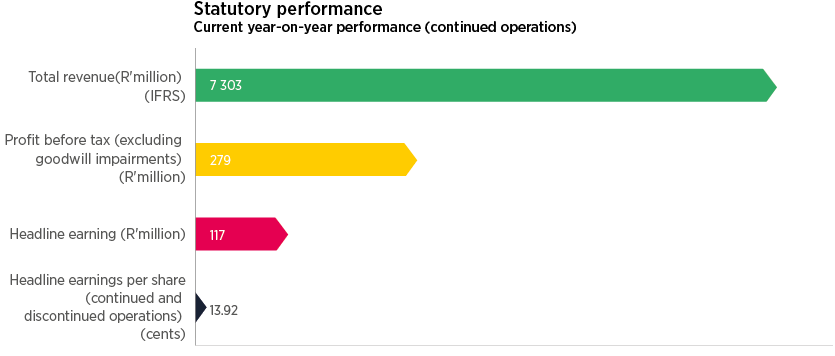
While reported financial performance was impacted by revenue contraction and impairment charges, these outcomes must be understood within the context of market‑driven changes, most notably the regression of Bonitas‑related income, impacting current and expected earnings across the services, private courier, wholesale, and pharmaceutical marketing and distribution lines of our business. Accordingly, total impairment charges of R1.37 billion were recognised during the 2025 financial year, spread across our continuing and discontinued operations.
Notwithstanding the accounting loss reported for the year, which was largely driven by non‑cash impairment charges, the Group delivered R679 million in operational earnings and R914 million in operating cash flows. These results underscore the underlying profitability, economic performance and cash‑generative strength of the core businesses, which were supported by resilient services performance and exceptional outcomes in capitation risk management and the public courier operations.
Medical scheme administration, risk management and technology cluster
The medical scheme administration, risk management and technology cluster delivered resilient performance and contributed materially to the Group’s financial performance. This contribution was delivered through disciplined execution across administration, managed care and capitation risk management activities both locally and abroad.
Financial outcomes in the South African market were primarily driven by contract losses linked to Bonitas, related to the administration of the lower-income BonCap option, and by marketing revenue. These events were partially offset by muted membership growth, averaging 2% locally, driven primarily by closed medical scheme membership growth. This continues to accelerate ahead of local open scheme growth, while the Group’s Namibia operations delivered average membership growth of approximately 2% for the year.
In combination, these dynamics resulted in total lives under management increasing to 4.09 million, reinforcing the scale, relevance and defensive characteristics of the Group’s core services platform.
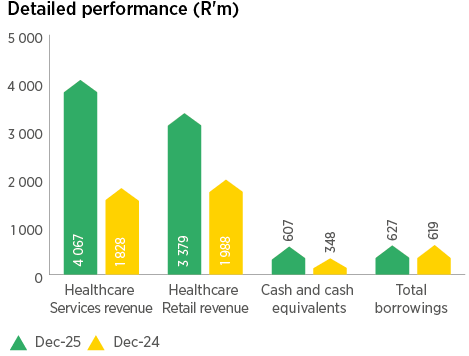
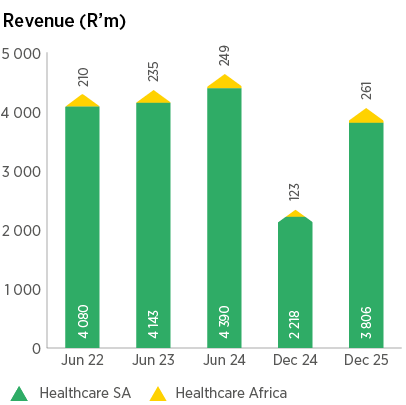
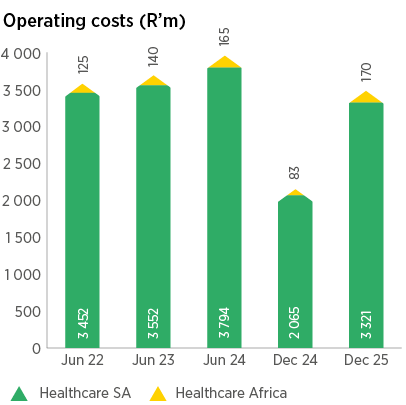
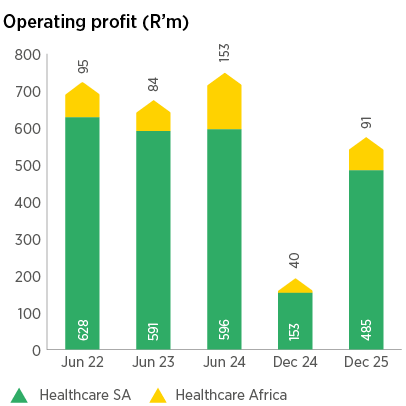
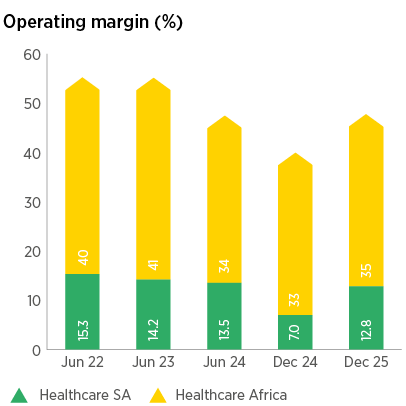
The Group’s Africa operations continued to make a meaningful and increasingly important contribution to the cluster. These businesses delivered stable performance in line with prior‑year expectations, generating R261 million in revenue for the year, equivalent to approximately 6.5% of the cluster’s revenue. The growing contribution of these markets relative to total Group revenue, together with disciplined cost management across South Africa and the rest of Southern Africa markets, enhanced the quality of earnings within the cluster and supported an improvement in its operating profit margin to 14.2%, strengthening AfroCentric’s overall earnings profile.
A key strategic differentiator within the cluster remains the Group’s capitation risk management capabilities, particularly across specialist healthcare risk management and oncology (reported under the pharmaceutical cluster) and dental lines, which delivered strong profitability during the year. These outcomes reflect robust underwriting discipline, effective claims management processes, and mature clinical risk governance frameworks, all of which remain central to the Group’s value proposition to schemes operating in an increasingly constrained funding environment.
The dental capitation business, DENIS, delivered a particularly improved financial performance within the cluster, increasing its operational earnings by 26.2% for the year, supported by favourable utilisation trends and a tightly controlled claims experience. As a specialist line of business, dental capitation provides the Group with a clear and defensible strategic competitive advantage, requiring deep actuarial, clinical and operational expertise that is not easily replicated. This capability positions the Group as a preferred partner to medical schemes seeking predictable cost outcomes, sustainable benefit design and improved member experience, while generating attractive risk‑adjusted returns.
The year marked an important milestone in the evolution of the Group’s managed care model, with the successful rollout of the spinal care risk transfer pilot within Fedhealth and Medshield, which performed ahead of expectations, achieving break‑even economics during its initial pilot phase. This performance demonstrated the commercial viability of applying capitation‑based risk management principles to high‑cost musculoskeletal cases.
The success of this pilot, together with the improved performance of the Group’s dental and oncology capitation businesses, provides tangible validation of the Group’s strategic intent to transition toward a value‑based care model, where specialist clinical capabilities, proactive cost management and aligned incentives support sustainable financial outcomes for our scheme clients, our members and shareholders. These developments reinforce management’s confidence in progressively evolving the managed care offering away from traditional utilisation‑based approaches toward scalable, data‑enabled value‑based care solutions across additional chronic and specialist conditions.
A key strategic milestone achieved during the year was the successful completion of the sale of AfroCentric Distribution Services, together with its wholly owned subsidiaries Tendahealth, AfroCentric Financial Services (the ADS Group) and Wellworx, to Sanlam Life in July 2025 for R13 million, net the indemnity claim paid to Sanlam Life. This transaction formed part of the Group’s broader strategy to sharpen focus on core healthcare servicing capabilities, while leveraging partnerships to drive distribution scale more efficiently and sustainably.
The disposal has allowed AfroCentric to embed health sales and distribution within a well‑capitalised, scalable ecosystem, enabling a more integrated healthcare platform for medical schemes, gap cover products, primary healthcare insurance and wellness solutions. Importantly, the transaction lowered operational risk and complexity, allowing AfroCentric to generate liquidity from the ADS Group while maintaining access to enhanced critical distribution capabilities.
Pharmaceutical cluster
This cluster comprises three linked but separate businesses, namely:
- The courier business – Pharmacy Direct, which delivers medicines to medical scheme members and the public through a partnership with the Department of Health
- The pharmaceutical business – Activo, a medicine manufacturer and distributor selling directly into the open pharmacy market
- The managed care risk management business – Scriptpharm provides risk management and pharmaceutical value chain optimisation services to schemes through an integrated patient‑focused approach. These services are delivered through a risk-based capitation model
Performance within the pharmaceutical cluster during the year was materially impacted by the termination of three Bonitas designated service provider arrangements linked to the BonCap, Primary and Primary Select options, which took effect from February 2025.
These terminations had a direct and adverse effect on revenue generation and trading volumes across Pharmacy Direct Private, Curasana Wholesale and Activo, and represent the primary driver of the underperformance reported within this cluster for the year.
The loss of designated service provider status for these three options resulted in a sharp contraction in private‑market script volumes, with average monthly scripts declining to 105 560, down from 157 759 in the prior period. This represents a 33% reduction in private‑market volumes, reflecting both the immediate impact of the termination and the channel’s structural sensitivity to scheme‑mandated distribution arrangements. In addition, the designated service provider terminations adversely affected antiretroviral product category volumes (down 40.5% year on year), further weighing on trading performance and profitability margins across the wholesale and marketing components of the pharmaceutical cluster.
While private‑market activity contracted materially, the year was also characterised by a record‑breaking performance from Pharmacy Direct’s public sector courier business, which continues to demonstrate undeniable scale, relevance, and reach in advancing South Africa’s national healthcare objectives. The public courier business plays a critical role in the national healthcare ecosystem by supporting the Department of Health in providing access to essential chronic medication for over 2.4 million patients across several provinces, primarily through the CCMDD programme.
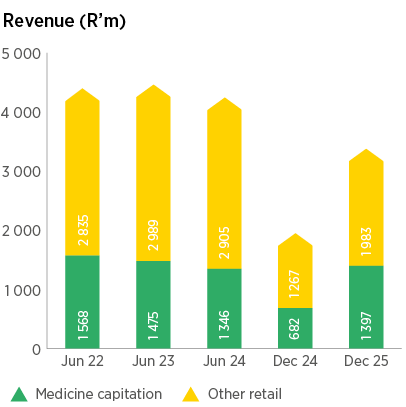
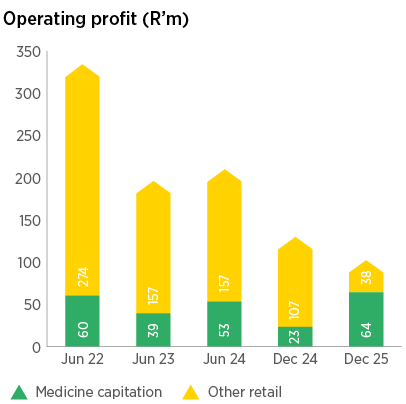
During the year, the public courier business increased average monthly script deliveries to 1.417 million, up from 1.329 million in the prior period. This represents a 6.6% increase in monthly delivery volumes, marking the strongest operational performance the business has achieved to date. The growth reflects the continued expansion of the public‑sector programme, the operational reliability delivered by Pharmacy Direct, and the Group’s ability to execute at scale in a highly regulated, service-driven environment.
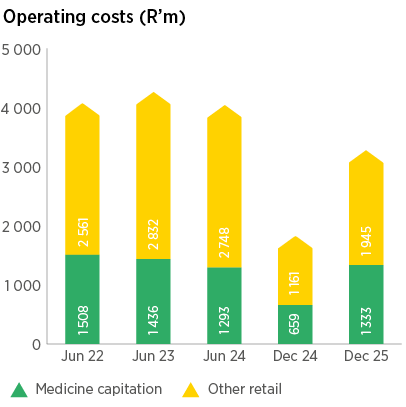
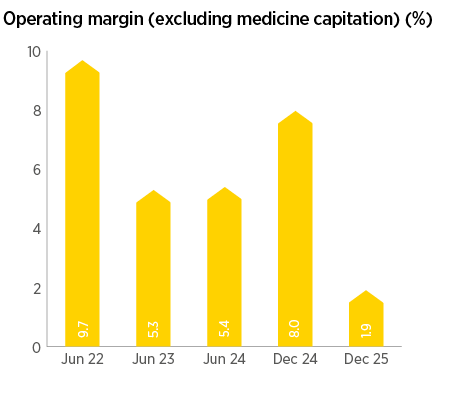
The shift in business mix toward a higher proportion of public‑sector volumes, while positive from a scale and access perspective, has had a dilutive effect on overall courier trading margins (down from 6.8% in 2024 to 2.2% in 2025). Notwithstanding this margin impact, the public courier operation delivered a strong absolute operating profit contribution, supported by operational efficiencies and improved organic market penetration, reinforcing its role as a stable, strategically important component of the pharmaceutical cluster and contributing positively to Group earnings.
Similar to the performance of our dental capitation business (reported in the medical scheme administration, risk management and technology cluster section), Scriptpharm’s managed care offerings, specifically in oncology lines of expertise, delivered a 29% improvement in profitability for the year, driven by disciplined risk selection, effective claims adjudication and the successful execution of profit‑sharing arrangements with scheme clients.
These results underscore the scalability and durability of the Group’s specialist risk management platforms and highlight their role as long‑term value drivers within the AfroCentric portfolio.
In parallel with the operational refresh underway, the Group has entered into a sale and purchase agreement relating to the potential disposal of the Activo Group, subject to the fulfilment of customary external approvals. This transaction represents a deliberate step to divest from pharmaceutical manufacturing and distribution activities, release capital tied up in non-core, working capital-intensive operations, and allow the Group to sharpen its focus on capital-light, higher-return healthcare activities.
As a result, the Activo Group has been classified as a discontinued operation, and its assets and liabilities have been reclassified as Held for Sale, in accordance with our applicable financial reporting standards. This classification appropriately reflects the Group’s strategic intent to realise short- to medium-term value from assets that are no longer aligned with the Group’s long‑term operating model.
In aggregate, the pharmaceutical cluster’s performance reflects a year of transition, marked by structural revenue losses in private‑market channels alongside exceptional execution and growth in public‑sector distribution, as well as healthcare risk management and the strategic decision to exit the Activo Group. As a management team, we intend to continue actively reshaping the retail portfolio to align with sustainable margin profiles, reduce earnings volatility, and ensure strategic relevance within the evolving healthcare landscape.
Balance sheet, cash flow and capital discipline
The balance sheet for the year reflects the recognition of material impairment charges, primarily relating to goodwill and intangible assets within Medscheme, Pharmacy Direct and Activo Group. These impairments were driven by a reassessment of AfroCentric’s future earnings expectations linked to Bonitas following its decision to award several contracts to other service providers.
The recognition of these impairments represents a prudent, non‑cash reset of asset values in line with AfroCentric’s current operating realities. Importantly, the impairments do not impact the Group’s liquidity and were undertaken to ensure that the balance sheet appropriately reflects sustainable earnings assumptions going forward. As a result, the Group enters the next financial year with a more conservative capital base, better aligned to its revised strategic focus and medium‑term outlook.
The Group’s cash flow management remained efficient throughout the year, supported by improved working capital discipline and sound operational execution against considerable headwinds. Key contributors included:
- Stock procurement interventions, aligned to reduced private‑market volumes
- Improved profitability within core service and capitation businesses
- Containment of discretionary expenditure
- Continued focus on operational efficiency and cost control
As a result, liquidity and solvency metrics remained sound, providing the Group with the flexibility required to navigate the post‑Bonitas transition period.
Capital preservation and outlook
In light of the challenging operating environment, recent and forthcoming structural changes, the Board has taken a deliberate decision to preserve short to medium‑term capital. This approach is intended to prudently manage the balance sheet, protect liquidity, and provide the Group with the capacity to execute a cost and organisational reset during 2026, while maintaining service delivery and stakeholder confidence.
Management believes that this disciplined approach to capital allocation, combined with the strategic actions already taken, positions the Group to emerge from the Bonitas transition period leaner, more focused and better aligned to sustainable long‑term value creation.
Appreciation
Management extends its sincere gratitude to our people for their continued commitment, resilience and collaboration throughout a challenging year. Your unwavering dedication, professionalism and shared belief in our purpose have been instrumental in enabling the Group to navigate significant market headwinds while continuing to deliver meaningful value. We look forward to building on this momentum as we position the Group for sustainable, long-term growth.
Thato Moloele
Group CFO