
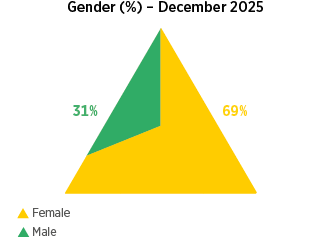
Our people remain central to delivering sustainable healthcare solutions and upholding our social licence to operate. In 2025, we continued to strengthen our workforce profile, deepen transformation, and invest meaningfully in culture, wellbeing and capability. With a total South African headcount of 5 061 employees, a predominantly female workforce (69.5%), and sustained progress in recruiting previously disadvantaged groups, we have advanced our commitment to diversity and inclusive growth. At the same time, we embedded a refreshed values-led culture, expanded employee listening mechanisms, and enhanced integrated wellbeing and development initiatives to support performance, resilience and long-term organisational sustainability.

| * | These are SA employees, not the total Group including Namibia and Mauritius. |
Union members
In line with their constitutional rights, we uphold our employees’ right to freedom of association and collective bargaining, the protection of employee representatives, and the right to be a trade union member.

Staff appointments
In the past period, AfroCentric has seen an increase in top management from previously disadvantaged groups.

| * | These are SA employees, not the total Group including Namibia and Mauritius. |
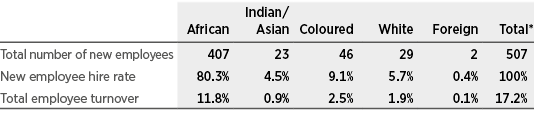
As part of our efforts to advance diversity and transformation, 93.9% of new appointments by December 2025 were from previously disadvantaged groups. Despite the ongoing war on talent, we attracted an additional 21 employees (81% at the professionally qualified level). This is crucial to our succession strategy to create a talent pool for the next level.
Employee hires and turnover
By gender

| * | These are SA employees, not the total Group including Namibia and Mauritius. |
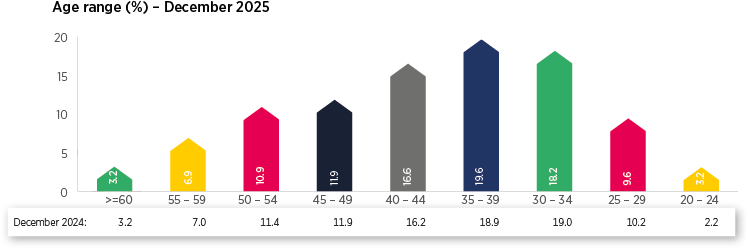
By age

By race
| * | These are SA employees, not the total Group including Namibia and Mauritius. |
Our culture journey – refreshing and reconnecting to a values-driven culture
In 2025, AfroCentric reached a significant milestone by launching a structured Values Refresh Programme to cultivate a shared, future-ready, values-driven culture centred on Integrity, Care, Innovation, and Collaboration. The refresh was intentionally co-created to ensure authenticity, relevance, and ownership, with nearly 50% of AfroCitizens contributing to defining what the values mean and how they should look in action.
Engagement occurred through multiple channels and deep listening moments, including a digital values survey (capturing 17% of organisation-wide insights), 56 virtual workshops (totalling 84 hours of co-creation), and four senior leadership immersion sessions to secure leadership alignment and commitment. Insights from these engagements were consolidated into a practical Values Framework that describes the values “in action,” observable behaviours and cultural expectations aligned with our purpose.
The Values Refresh formed part of the broader 2025 Culture Refresh Programme. It was delivered through a phased approach in the second half of 2025, moving from introducing and launching the values to build awareness to landing the values with colleagues to encourage engagement, deepen understanding, embed meaning and ensure leadership alignment. This approach ensured that values were not treated as a once-off communication event, but as an evolving culture shift supported by leadership advocacy, enabling tools and measurement.
To translate the refreshed values into lived culture, AfroCentric embedded a phased programme approach with a range of practical interventions aligned with clear objectives and deliverables.
Phase I – Launch (June – July): The organisation introduced the refreshed values and built early awareness through a leadership roadshow kick-off (24 June), desktop lockscreen rollout (July), and a communication campaign featuring CEO messaging, Exco value videos, and an integration narrative aligned with the broader strategic direction. Supporting assets included infographics, digital collateral and invitations to participation activities.
Phase II – Land (August – December): Focus shifted to deepening engagement through immersion and co-creation workshops, alongside development and validation of the strategic Values Framework. This phase also provided an opportunity for our Senior Leadership team to participate in a Values Immersion Experience, a dedicated space for reflection, connection, and growth as they explored the refreshed values and AfroCentric Leadership Ethos, amplifying and strengthening the message that values-led leadership is not just important, it is essential. Refreshed values messaging remained a strong feature throughout the remainder of the year in our weekly Connexion newsletter and other Executive communication.
Employee listening strategy – Pulse survey
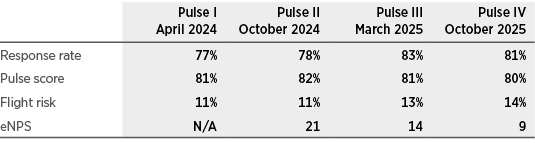
In October 2025, we conducted our fourth pulse survey, which highlighted significant progress in fostering a positive workplace culture.
Our pulse data
Employee wellbeing
Employees are our most valued asset, and we therefore prioritise integrated wellness programmes that promote wellbeing and foster a culture of care. Recognising that wellness drives productivity and organisational performance, we provide employees with the support they need to navigate challenges and reach their full potential. Our executive leaders visibly champion these initiatives, demonstrating strong organisational commitment and encouraging meaningful employee engagement.
Our organisation’s employee wellbeing strategy is underpinned by an integrated Five-Star Model comprising physical, emotional and mental, financial, social wellbeing, and organisational effectiveness. This model enables a coordinated, preventative approach to workforce wellbeing, supporting early intervention, sustained access to care, and organisational performance.
A key focus on prevention and early intervention through ongoing access to care is achieved through primary healthcare clinics, which provide continuous, year-round support, enabling employees to access assessment, treatment, and referral services without delay. 3 990 employees accessed clinic services in 2025, with health education, family planning, and respiratory and gastrointestinal conditions remaining the most common reasons for utilisation. This consistent uptake reflects sustained reliance on accessible primary care. The always-on clinic model was complemented by Wellness Week, during which 1 366 employees completed health risk assessments, and 833 participated in voluntary HIV testing. Medical scheme data continues to indicate diabetes, hypertension and hyperlipidaemia as the most prevalent chronic conditions, reinforcing the importance of ongoing screening and early detection initiatives.
As a healthcare organisation, it is crucial that all our employees enjoy access to quality healthcare through the three medical scheme options we have made available. Beyond medical aid offerings, primary health insurance continues to gain traction among employees earning below a certain threshold, with enrolment steadily increasing from 595 in 2024 to 716 in 2025.
The Employee Assistance Programme (EAP) remained a central component of the wellbeing ecosystem, with utilisation increasing steadily year on year. Total engagement increased from 1 028 participants in 2023 to 2 027 in 2024, reaching 4 788 in 2025. Individual employee cases increased from 534 (2023) to 1 166 (2024) and remained at 1 166 in 2025, including 102 dependant cases. The Afrocentric Group engagement rate of 73.1% exceeds the healthcare sector benchmark of 54.4%, reflecting programme maturity, accessibility and effective awareness. Emotional and mental health concerns accounted for 55.7% of cases, followed by financial wellbeing (36.2%) and workplace wellbeing (31.2%). Based on savings of R18.8 million against an investment of R1.4 million, the programme delivered a return on investment of 22.20, demonstrating sustained organisational and financial value.
Mental health support was strengthened through structured and responsive initiatives informed by EAP trends. Mental Health Round Tables have become a sustained programme that was established in 2023 to address stress, family issues, bereavement and anxiety risks identified in the EAP data. Topics tackled in this platform ranged from imposter syndrome, Gen Z and mental health, black tax, and money relationship and mental health.
Research shows that men are less likely than women to seek both general health and mental health support due to stigma and traditional masculine norms1. We therefore introduced the Quarterly Men’s Fireside Conversation Programme to encourage men to talk openly about both their health and mental health in a supportive, stigma-free environment. In 2025, this forum focused on topics that resonate with our male population, including destigmatising mental health dialogue with men, the effects of substance abuse in the workplace, men’s health and empowering fathers to partner in their children’s wellbeing. Our CEO, Gerald van Wyk, is the main executive sponsor for this programme, demonstrating our leadership buy-in of wellness initiatives. Participation in this forum has grown over time, reflecting increased trust, relevance and early engagement with preventative support.
| 1 | Banks & Collier, 2025; Mursa et al., 2022, as cited in Sagar Ouriaghli et al., 2020 |
In 2025, we bolstered the existing financial wellness services, which included onsite financial coaching clinics, debt counselling, and budget streamlining, by incorporating adverse or default removals, credit report fixes, and consolidated loans. The programme focused on budgeting, debt management, rehabilitation and savings behaviour, resulting in average monthly savings of R12 711, average new monthly restructured amount paid towards debt after debt review of R3 956 down from R16 667; 342 total accounts were settled with a total settlement paid of R2 377 274, with a total settling saving of R896 025, reduced averaged loan instalments from R13 210 to R2 295, resulting in average monthly affordability increasing by R10 915. Measurable impact was demonstrated through reduced debt exposure and increased financial literacy. These outcomes reinforce the organisation’s commitment to financial resilience as a core component of holistic wellbeing.
Creating a safe and inclusive work environment remained a priority, with utilisation trends informing continued investment. Mommy rooms are in place to support employees returning from maternity leave by enabling dignified and practical workplace reintegration. In response to the impact of gender-based violence, in 2025, we implemented an integrated gender-based violence (GBV) awareness and prevention campaign aimed at fostering a safe, supportive and trauma-informed workplace. Branded as “Calling a Family Meeting,” the initiative unified the Women’s Health Programme, Men’s Fireside Conversation and the Mental Health Round Table to address GBV holistically. Key objectives included raising awareness, educating employees on recognising abuse, reducing stigma and ensuring access to support services. With Exco sponsorship, the project featured a flagship webinar and an organisation-wide communication campaign led by our virtual mascot, Zola the Brave. It continued access to a wellness service through our EAP. Through this multi-layered approach, the campaign strengthened collective responsibility, promoted psychological safety, and reinforced the organisation’s commitment to protecting and supporting employees affected by GBV.
Wellbeing was further embedded at the organisational health level through leadership and team health interventions, as well as targeted counselling and referral support. Uncertainty created by organisational changes can cause stress and anxiety among employees. During acquisitions and amalgamations in 2025, employees received support that not only helped them cope with change but also built resilience. Resilience, stress awareness, change management, and onsite counselling support were among the training interventions provided to employees and leaders, equipping them with the necessary skills while creating a safe space to process and express their emotions.
Additional wellness education sessions rolled out across the business in response to departmental unique needs and trends covered topics such as psychological safety, bullying in the workplace, emotional intelligence, work-life balance, and disability sensitisation. Through these sessions, we reached 5 932 employees and leaders.
Overall utilisation trends across wellbeing programmes reflect increasing engagement, earlier access to support, and growing confidence in organisational care structures.
Over recent years, the Group has recognised individual and team achievements through the Ignite Recognition Programme. As the organisation aligns initiatives to its refreshed values, recognition efforts are being repositioned, with an interim programme implemented in 2025 to sustain engagement, while a comprehensive Group-wide framework is being developed. The interim programme builds on existing awareness, centres on the Afrocentric Group Citizen Individual Award, and reinforces a culture of belonging, innovation and excellence. It is leader-led, people-centred, inclusive and values-driven, anchored in the Group values of Collaboration, Innovation, Care and Integrity. Five award categories were offered: Customer Champion; Living our Values; Innovation and Creativity, Leader of the Year and Collaboration Excellence (Team award). In addition, a discretionary Chief Executive Award will be conferred, and the selected Group Exco will consider individual award recipients for participation in a prestigious corporate recognition experience.
Recordable incidents rates
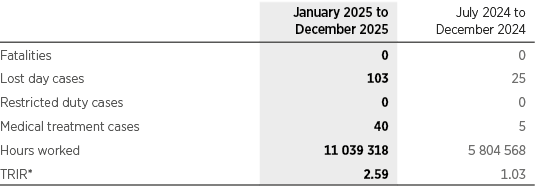
| * | Total recordable incidence rate (TRIR). |
Work arrangements fit for our business
To support our transition to a hybrid workplace, we introduced an updated working arrangements policy. Alternatives such as fully remote and hybrid roles form part of our new ways of working as we strive to attract and retain the best talent in the healthcare industry.
The policy allows staff to choose from various modalities in line with operational requirements.
Top Employer 2024/2025
After AfroCentric’s first measurement, we are proud to announce that we have attained the status of one of South Africa’s Top Employers, as designated by the globally recognised Top Employers Institute for the third year.
The Top Employers Institute’s rigorous certification process evaluates organisations based on their performance in crucial human capital domains, including people strategy, work environment, talent acquisition, learning, diversity, equity and inclusion, wellbeing and more.
The Top Employers Institute Certification Programme has certified and recognised over 2 300 Top Employers in 121 countries/regions, positively impacting the lives of over 12 million employees globally.
Online learning
The AfroCentric Online Academy offers online training. Employees have constant virtual access to legislative courses, Company policies and functional training courses.

3 663
online courses were undertaken by
962
employees
(December 2024: 2 601 courses undertaken by 440 employees)
Learnerships
These programmes help candidates earn qualifications and gain valuable work experience.
201
unemployed youth participated in learnership programmes
(December 2024: 8 unemployed youth)
77
learnerships catered to people with disabilities
(December 2024: 57)
Skills development
Sector Education and Training Authority and industry-funded learnership initiatives were implemented and prioritised across the Group.
R6.8 million
(Course cost R3.5 million and stipends R3.3 million)
invested towards developing unemployed learners with disabilities
(December 2024: R1.4 million invested)
Bursaries
We offered study assistance to 30 employees to the value of
R0.9 million
(December 2024: six employees at R0.2 million)
Internships
These programmes help candidates gain valuable work experience after obtaining a qualification.

32
other learners participated in internship programmes
(December 2024: 32)
40 learnerships formed part of our new employee value proposition, enabling employees’ children to participate in learnerships
Participation of staff in the Sanlam Leadership development programmes
Zero Sanlam Junior Management Programme (SJMP)
Three Sanlam Middle Management Programme (SMMP)
Two Sanlam Senior Management Programme (SSMP)
Five Advanced Leadership Certificate in Design Thinking
Nine Lead for Performance & Growth (Harvard Programme)
Performance management
AfroCentric uses a balanced scorecard (BSC) approach for performance management. The BSC provides management with the tools to drive competitive success. It translates the organisation’s strategy into performance measures that provide the framework for a strategic measurement and management system.
When managing individual performance, we aim for a mutually beneficial environment where managers and employees share clear expectations and objectives. Employees participate in all phases of the performance management process and share ownership of the outcomes with the organisation.
Participation in internal programmes
Presentation skills – eight participants
Self-mastery – one participant
Telephone techniques – five participants
Business writing skills – 10 participants
Coaching for superior performance – 53 participants
Stress management – nine participants
External bursaries
Five medical students
10 nursing students
R2.5 million in total funding
Continuous conversations, feedback and development
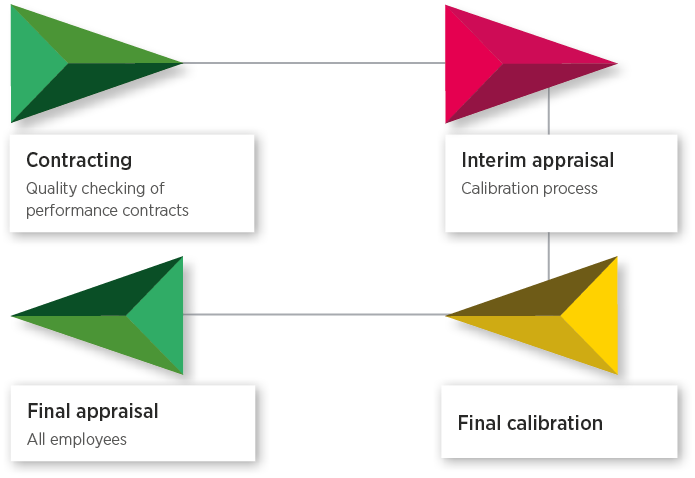
Managing performance is not an annual event but a continual process of feedback and collaboration. Performance discussions are therefore expected to cover more than simply performance ratings. Instead, leaders should have regular, meaningful conversations to close performance gaps and enable individuals to understand how their performance and behaviour link to the organisational strategy and how their contributions drive business growth.
Our performance management system aims to enable:
- A streamlined performance management process to direct line managers’ time from administrative activities to ongoing performance conversations
- High-quality performance discussions, giving employees more frequent feedback and addressing performance gaps in real time
- The creation of a high-performance culture within the organisation
- Employee-led performance management
- Difficult conversations that drive positive change
Transformation and B-BBEE
As the most transformed health-related business listed in South Africa, we are committed to corporate citizenship, driving transformation and upholding our social licence to operate. The Group invests in healthcare-related companies, and our contribution to healthcare extends beyond our products and services. Our social impact starts within the Group and extends to the suppliers and communities we directly impact, as well as the broader society affected by our health management initiatives.
We value diversity, equity and inclusion and aim to create an environment where differences are valued, as demonstrated by our diverse workforce and supply chain.
B-BBEE creates opportunity while mitigating operational risk



The Group achieved a level 1 B-BBEE contributor status
AfroCentric’s transformation framework supports national strategic priorities and our purpose of creating sustainable healthcare solutions to enhance our stakeholders’ quality of life.
The degree of the Group’s alignment of B-BBEE policies and practices to the requirements of the different transformation-related legislation in support of the South African Government’s overall economic transformation includes, but is not limited to:
- The NDP 2030
- The National Strategy for Broad-Based Black Economic Empowerment
- The Revised Broad-Based Black Economic Empowerment Act 53 and related amendments
- The Amended Codes of Good Practice on Broad-Based Black Economic Empowerment of 2013
- The Employment Equity Amendment Act of 2014 and associated regulations
- Skills Development Act and related Skills Development Levies Act
- The Preferential Procurement Act
AfroCentric Investment Corporation Limited BEE status

AfroCentric Health (RF) Proprietary Limited BEE status

Pharmacy Direct Proprietary Limited BEE status


Enterprise development in action
Our enterprise and supplier development initiatives are designed to strengthen the healthcare ecosystem, expand access to quality services, and support sustainable Black-owned businesses that contribute meaningfully to South Africa’s health infrastructure. Through targeted financial support and strategic partnership, we enable enterprises to scale, innovate and deliver broader societal impact.
Molecular Imaging and Therapy Limpopo Proprietary Limited (MI&T)
Expanding access to advanced cancer diagnostics in underserved regions

MI&T provides nuclear medicine diagnostics and therapy, delivering critical radiation services to patients living with cancer. The business plays a vital role in expanding access to specialised nuclear treatment for patients in the northern regions of Limpopo and Mpumalanga, reducing the need for long-distance travel to major metropolitan centres.
MI&T holds the distinction of being recognised as the first Black woman-owned PET/CT scan facility globally, marking an important milestone in both healthcare transformation and gender empowerment within highly specialised medical services.
Through an enterprise development grant of R5 247 958.48, AfroCentric is supporting the sustainability and growth of this 100% Black female-owned enterprise, strengthening regional oncology services and contributing to more equitable access to life-saving diagnostics and treatment.

Alma Clinics Proprietary Limited
Bringing affordable primary healthcare closer to communities
Alma Clinics is a nurse-led primary healthcare provider, remotely supported by a doctor and enabled by modern technology to deliver accessible, affordable care. The model is designed to extend quality primary healthcare services to underserved communities while maintaining clinical oversight and efficiency.
Funding support is enabling the establishment of a new clinic in the Hammanskraal area and the expansion of dentistry and renal services at two existing facilities, where demand remains high. This expansion enhances community-level access to preventative and essential healthcare services, reducing pressure on public health facilities.
As a 100% Black-owned enterprise with 75% Black female ownership, Alma Clinics reflects our commitment to inclusive economic participation. Grants of R274 466.67 (enterprise development) and R5 650 696.96 (supplier development) are strengthening both operational capacity and long-term sustainability, supporting expanded reach and improved healthcare outcomes.

MIFS Solutions CC
Driving digital efficiency in healthcare and beyond
MIFS Solutions provides information and communications technology (ICT) services that help businesses manage their finances, stock and ordering processes more efficiently. Its digital tools support accounting, warehouse management and online ordering, enabling businesses to operate more accurately and productively.
Through an enterprise development grant of R808 737.00, AfroCentric is supporting this 100% Black-owned business to expand its capacity and strengthen its service offering. By enabling smoother day-to-day operations, MIFS contributes to improved efficiency and reliability within the broader healthcare value chain.
Ndala ICT Solutions Proprietary Limited
Innovating digital service delivery
Ndala ICT Solutions provides end-to-end ICT services to small, medium and large enterprises across the private and public sectors. The company supports digital transformation through tailored technology solutions that enhance efficiency and service delivery.
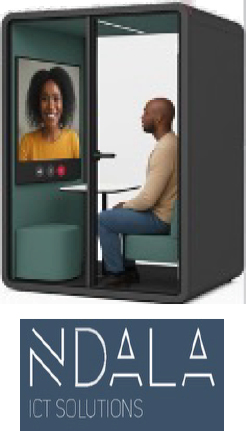
Enterprise development funding of R2 580 362.00 is being directed toward the development and piloting of the ConnectPod platform. This innovation aims to improve service delivery by providing clients with access to digital remote consultation facilities in secure and private environments. The initiative has the potential to enhance access to professional services, particularly in contexts where privacy and connectivity present barriers.
As a 100% Black-owned enterprise, Ndala represents the role of digital innovation in strengthening healthcare access and operational effectiveness.
YMS Medical Supplies Proprietary Limited
YMS Medical Supplies operates as a medical devices supplier and pharmacy wholesaler, providing essential health products utilised in healthcare facilities. Reliable supply of quality medical equipment and consumables is fundamental to patient care and operational continuity.
Funding of R2 005 054.95 is being used to acquire demo machines to expand sales across multiple product lines, strengthening long-term commercial sustainability.
As a 100% Black-owned enterprise, YMS contributes to supplier diversity within the healthcare sector while reinforcing the resilience of the medical supply chain.